Notes to self 9 – Momentum issues
What’s the problem?
To make certain (Balboa) moves work I need to spin out of a move on an arc but I am coming out of the move in a straight line which means I end up slightly in the wrong place.
Why am I coming out straight?
Because I am using my own momentum to make the turns work. If I used only the momentum I was given I would slow down. If I slowed down as I turned I would come out on a curve.
Why I am using my own momentum?
Because I am making moves work by building up the tension within my own body to create a spring to rather than using my partner and creating the tension together. I start the move by myself and kind of keep on going by myself.
What am I doing that?
Many reasons:
- Most leaders are so used to followers doing what I do (i.e. faking the move) that they don’t need to lead the move properly to make it work in class and we’re all stuck in a vicious circle.
- Previous feedback (in different contexts) has included:
* Followers should always keep going as if on frictionless ball bearings
* When doing multiple turns you need to keep turning down the line and not wander off
* I am slowing down whilst doing multiple turns
* When doing multiple turns you need to keep stepping on the beat and keep the timing even - No doubt all of those bits of feedback were relevant at the time/for the move being taught but they got stored somewhere and now they are subconsciously influencing my dance in ways that aren’t always helpful.
How am I going to fix it?
Hmmm…. it’s proving to be one hell of a difficult habit to break and it’s going to take a lot of work to undo.
Do I really want to fix the problem?
Fixing me means I need to practice, which means that I have to stop being nice and I need to ‘break’ a lot of partner’s moves in class. If I really follow what the leader is doing then I’m not going to be going anywhere half the time and their leading skills are going to need to dramatically improve.
This should be a win/win situation but then classes are on a Friday night, perfecting one’s dance technique is only a small part of what people are there for…. ‘difficult’ follows don’t get dances…
10 reasons why I enjoyed my Latin dance class so much
I’ve been back to the Latin dance at my local gym a couple of times and I am still loving it, reasons below.
- The teacher loves to dance. It’s a joy to watch them play with the routine each time they perform it. That joy is infectious.
- Warming up and cooling down. The older I get the more I appreciate taking the time to really warm up my body. The warm up gives me a chance to forget work/commute and means I have 5-10 minutes to settle before jumping into the class proper and needing to focus. I also think of a warm up as a trust building exercise, especially with a new teacher.
- The repetition. I am a simple soul, I like repetition. I like repetition but with something new to focus on even more. For example, once the class had the basic movement the focus changed to improving that movement with advice about position of feet or timing or hand position.
- The feedback about posture. With a few notable exceptions [Cookie’s “tits out” springs to mind] most Lindy Hop teachers don’t give all that much feedback about how you look in a general class. Loved the simple 20 second demo of which looks better – rounded shoulders or standing up straight?
- The emphasis on quality and changing the feel of the movement within a routine. Soft and sensual v athletic. Teacher gave a lovely example of the difference between Zumba with everything done at 100% effort compared to dancing with highs and lows.
- The emphasis on tying breathing to movement. For example at the end of the phrase, there was a step down, we needed to really step down and emphasise the down movement and then emphasise it more my breathing out at the same time.
- Hips. I am far too English/reserved to ever have Latin hips but I quite like trying.
- Trying to different things with my body. I am enjoying dancing on the balls of my feet. Practising walking with straight almost locked legs. Kicking with pointed feet. It’s all new and I am enjoying exploring the differences.
- The rhythms. Challenge of challenges. I am hopeless at changing rhythms in Lindy and Bal and this is no different but some of these rhythms are completely new to me and I am liking the challenge.
- Being sexy. I am not someone who embraces my inner diva (Lindy Hop is an ideal dance for me) but I am having fun messing around and playing at being someone else.
Not really enjoying Lindy or Bal at the moment, it’s summer, venues are quiet, too many follows and the fun element has disappeared. I don’t know, sometimes it’s nice not to have to think about someone else when you dance and to be able to focus entirely on what you are doing.
Latin dance
Work and life have been getting in the way of dancing for the last few months but last night I took some time out. Wasn’t in the mood for Lindy Hop/partner dancing so hit the gym and did 45 mins of Latin dance, an hour of yoga and an hour of street dance and went home feeling and happy and sweaty.
Latin dance, what can I say, I had an absolute blast! The hips, the music, the bosom shaking and the contrived hand positions are so not me but I loved it. Some of the rhythms and patterns were a real challenge, who knew holding one and moving slowly through two could be so ridiculously difficult? If time allows I might go back and I might even take along a pair of heels.
Reactions to The Female Lead’s Manifesto
My immediate reaction to the ‘The Female Lead’s Manifesto’ is about as mixed up as my reaction to feminism as a whole. *
I spent two years studying and struggling with feminist philosophies as part of my masters degree. The details are now largely forgotten but I read some brilliant social science research written by women looking at how knowledge is constructed, some badly thought out philosophy, some extremely biased history (which is supposed to be ok in our postmodernist it’s my view and that’s as good as any other world) and some really thought provoking commentaries. I’ve never resolved for myself whether or not I should embrace the essential differences between men and women or think in terms of social constructivism and strive for equality.
Regarding the Manifesto, is outlining the differences between male and female leads in this way helpful?
Experience tells me that female leads are usually more considerate, more interested in teamwork, better at picking up on body language, not competitive and so on but I am not sure that I want to see female leads described (pigeon holed?) in this way. Do ‘female’ traits really make you a better leader? I find the touchy feely descriptions of female leads implied by the manifesto restricting. I wouldn’t mind seeing some fiercely competitive female leads giving it their all in a competition. What words would I want to see used to describe a lead? Confident, considerate, clear, exciting, musical, maybe rebellious … (my exact word choice will depend on my mood and the music but I want a mix of male and female traits).
Experience also tells me that female leads are not always better than male leads at the same level. Female leads tend to have danced both roles so they generally dance with more understanding of their partner from day one but given time most male leads seem to pick this up too.
I learnt to dance in a scene with a very strong female bias – female dance teacher/organiser with a supporting usually (but not always) male teaching partner so perhaps these issues simply don’t resonate as strongly for me as they might do for others? A more interesting question for me is why, in a female led environment, where there are usually too many followers, where women are really given the choice to lead or follow, do almost all women (myself included) still choose to follow? I’m not sure how the Manifesto will change this, gender roles are very deeply embedded in western culture.
A final thought, dancing might be about “having fun moving your body with another person” but “heterosexual romance and attraction” seems to play a large part in my local scene. People dance for many reasons but the given the number of people that dance, hook up and then leave the scene I would say heterosexual romance and attraction is high on many people’s agendas. Dancing just for the fun of dancing is mainly for the hardcore element.
* These are my initial thoughts, I might well change my view!
Rock ‘n’ Roll Britannia
If you are a Londoner, watch this when it comes onto BBC4 again: http://www.bbc.co.uk/programmes/b01sgbw2
(Unfortunately there’s almost no dancing in this clip bar a brief flash 7 mins in)
60 years on and the dancing/dress code is still the same!
If you are a glass is half full type person it’s good to see that your average Londoner’s dancing is still true to its roots. If you’re a glass is half empty type person then you can moan about how the average Londoner’s dancing hasn’t improved at all in the last 60 years!
Notes to self – 8
- Wait, wait, wait and then wait some more…. omg I am rushing my following at the moment.
- If you are feeling tired don’t dance, yes dancing is a good way to relax and it’s nice to meet up with friends but if you’ve had a long day at work going home might be a better option than going to a dance feeling tired, dancing badly, getting frustrated and then ending up even more tired from the late night
- Work on matching frame and picking up when a leader is giving you more or less frame and respond correctly.
- Tune out the music more and follow the lead more, don’t kill the momentum on a turn even if the music is screaming ‘slow’ when a lead has given you a quick, quick, quick type lead.
- Think long term, I am going to busy at work until the mid to late summer and I need to focus on that… then I will have more time to spend dancing (hopefully).
Should teachers teach footwork patterns for leaders at intermediate level?
Interesting post-dance pub discussion the other day. Should teachers teach footwork patterns for leaders at intermediate level?
Some of the leaders were complaining that the teacher made things really difficult for them by not teaching the footwork pattern and leaving it up the leaders to work out for themselves if their foot should go behind, in front or to the side.
I listened to the arguments being made and I thought yes, it is much harder if the teacher doesn’t tell you where to put your feet but you learn so much more about dancing if you have to work things like this out for yourself.
I think I understand what to teacher was trying to do, your feet end up where your feet end up – hopefully they are under your body. Your feet should cross because you are keeping them under your body not because that’s what the pattern says you should do. If you are taught to cross your feet to do a certain move it might be easier and you can learn that move more quickly but the shortcut means that you don’t learn much about how the dance works and it’s harder to progress as a dancer.
As a follow I think you give up on attempting to do the ‘correct’ footwork pattern fairly early on in your dancing career. A few social dances in and you realise that the patterns don’t fit what most leaders are doing most of the time [perhaps they do where you dance?]. Learning how to respond to what the leader is actually doing is the really tricky bit of following and it’s not something that you learn from being taught footwork patterns.
As a follower, I definitely prefer classes where you learn skills rather than patterns.
When you partner dance please remember you have another person attached to your arm!
Small rant…
Partner dancing, partnership, togetherness, connection, cooperation… if you’re not interested in these things why not try solo dancing?
Let’s take a simple scenario. A teacher explains very clearly that you must be able to do X, Y and Z competently to take this class and recommends going to another class, happening at the same time, where you can learn those moves if you can’t. During class certain people (leaders in this case but same applies to followers) clearly don’t know what X,Y and Z are let alone how to lead them. One leader cheerfully admits he’s only been dancing 4 weeks and has no idea what he’s doing!
WTF! If you jump into a class like this you end up making the class all about you. What is your partner supposed to do? Back lead the moves whilst attempting to talk you through? Do you both stand there like lemons? Do you shove your partner round the floor in some vague attempt to do the same as everyone else?
Partner dancing implies that you will be dancing with another person. In a dance class, that person has their own reasons for dancing and their own learning needs. It’s pretty unlikely they paid for a class so that they could act as your personal coach and walk you through the basics. Please think about the person attached to the end of your arm as well as yourself!
Feel better now…
Notes to self – 7 – Girl Jam
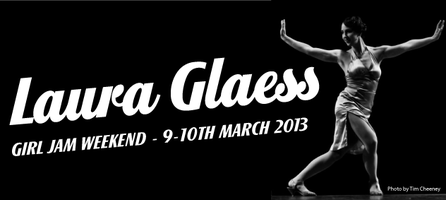
Solo dancing – never really enjoyed it, choreography – I can never remember it, women only events – lost their appeal after I left the Girl Guides. However, I signed up for Girl Jam 2013 knowing that it would be good for me and…. I really enjoyed it! Notes to self below:
Things I want to follow up on:
- Pulse/bounce from the bottom
- Shorty George – it’s about the knees, really move the knees side to side
- Think arms or legs but not both. Where should people focus when you are doing a move?
- Free style dancing to Charleston music is a lot easier when you string together a number of moves and memorise those rather than continually having to think about what to do next
General comments
- Laura Glaess’s body moves like a spring and it’s a joy to watch her dance. I don’t think you can really appreciate just how wonderfully her body moves watching YouTube clips of her dance
- It was nice to be taught by youngsters and to see just how dynamic and athletic their body movements are
- Professional dancers are incredibly ‘straight’ compared to the rest of us who spend our days sitting at a desk and end up a little rounded in the shoulders and back
- Great dancing and great teaching really aren’t the same thing. I’ve never really liked the way one our local teachers looks when she dances but but this workshop reminded me what a great teacher she is. People not getting the routine – break it down further, people still not getting it, break it down further still and drill it until people get it. Felt good to be in a class with a teacher that was really in tune with the class and their needs
- If I want to continue to do more solo dancing (other than beginner classes) I need to learn all the routines. Once you get above beginner level it seems to be assumed that you know the Tranky do, Jitterbug stroll, big apple, etc.
Things I learnt about myself:
- My life is pretty busy at the moment, I social dance but rarely have time go to classes or think about my dancing. It is intimidating to go back into a classroom environment!
- Step, step, triple step, step, step, triple step… I am really rusty on moving my feet to a lindy Hop rhythm. Too much Bal, too much rock and roll, too much not paying attention to what I am doing. I really need to practise this pattern, moving the steps in different directions and getting the rhythm back into my body.
- I still rock step automatically most of the time when partner dancing but left to my own devices I can now start on either my right and left foot without a second thought and needed to consciously remember which foot to start the routines on
- Swivels, my timing is slightly off (and always has been). I need to work on the rhythm of swivelling and doing it without a partner
- I look old and stiff and slow when I dance (the tyranny of dance studio mirrors…) which is pretty much how my body feels half the time. On the plus side I was a lot fitter than many of the younger women there.
- I have the memory of a goldfish when it comes to remembering routines
- I found it really hard to let go on the prep for turns. Taking a short swig of water during class I noticed that I wasn’t alone, perhaps it’s a British thing 🙂
- Counting, I am not naturally a counter and because I don’t teach/am not particularly OCD about my dancing, I have to think long and hard which bit of the Charleston happens on the ‘3’ or on the ‘4’. I think I just need to teach myself these things.
My reactions to Carsie Blanton’s new video Backbone
Jerry Almonte posted a link to a Carsie Blanton’s new video Backbone which features Sarah Breck and Sharon Davis dancing a little while ago. Here’s the video:
I think the video is arty and clever but I don’t particularly like the dancing. Not saying anything is wrong with the dancing, its just that as a performance it doesn’t grab me and make me want to keep watching. I found it interesting that the YouTube comments included “Titillating” and “So sexy!” I didn’t find it sexy at all, more like strangely asexual (if you can use that word in this context). The dark eye make up and sad faces don’t do it for me.
What interested and bothered me more about this video is my reaction to it. Instead of watching the dancing I ended up looking at the (very slight) bulge of flesh at the top of their stockings and thinking hey they’ve got some fat on them.
Am I a complete bitch? Probably! Am I envious of their bodies? Yes, I would love to have a body that looked that good. Am I jealous of their success? No. A lot of hard work has gone into that success, work that I wouldn’t have put in. Am I guilty of being manipulated by the media? Hell yes. I mean seriously, fat thighs? Here are two healthy, slim dancers, put a tight band around anyone’s leg and you will get that bulge effect! Where did that thought come from? I really am quite ashamed of myself…
 Lindy Hop variations for followers